25 wonderful things to do in Istanbul – including hidden gems
Suddenly the taxi bounced off the main highway and onto a dirt road on our fast and furious race from the airport to our hotel. We had no idea where we were, where we were going and whether we’d even live to tell the tale.
Spoiler: we did.
My long-time travelling bestie (and cousin) Kate and I arrived in Istanbul on our first visit. We were staying a couple of days, then boarding a small luxury ship to sail on a wonderful Greek history tour.
Istanbul is a wonderful pre or post cruise stop over city, or a part of your overall Turkiye visit, which it was on my second visit.
It is totally unique in many ways, the first being that it sprawls across two continents – Asia and Europe. Domes and centuries-old minarets fill the skyline, fishermen dangle their lines from bridges and little glasses of tea seem to appear whenever you pause for more than five minutes.
It is gloriously busy, occasionally baffling and completely addictive.
Haven't got time to finish this post now?
There is a lot to see, so don’t try to conquer Istanbul in a day or two. I’d allow at least four days for the main attractions and five or six if you want time to wander beyond Sultanahmet, cruise across the Bosphorus Strait and explore the Asian side.
Wear comfortable shoes, keep some room in your suitcase and arrive hungry. (I’ve listed my top recommendations in this post).
Here are my picks for the best things to do in Istanbul, including the famous sights you really shouldn’t miss and a few quieter corners that many first-time visitors walk straight past.
I prefer guided tours in cities that I’m not familiar with, so I’ve added some links below you might like to check out too.
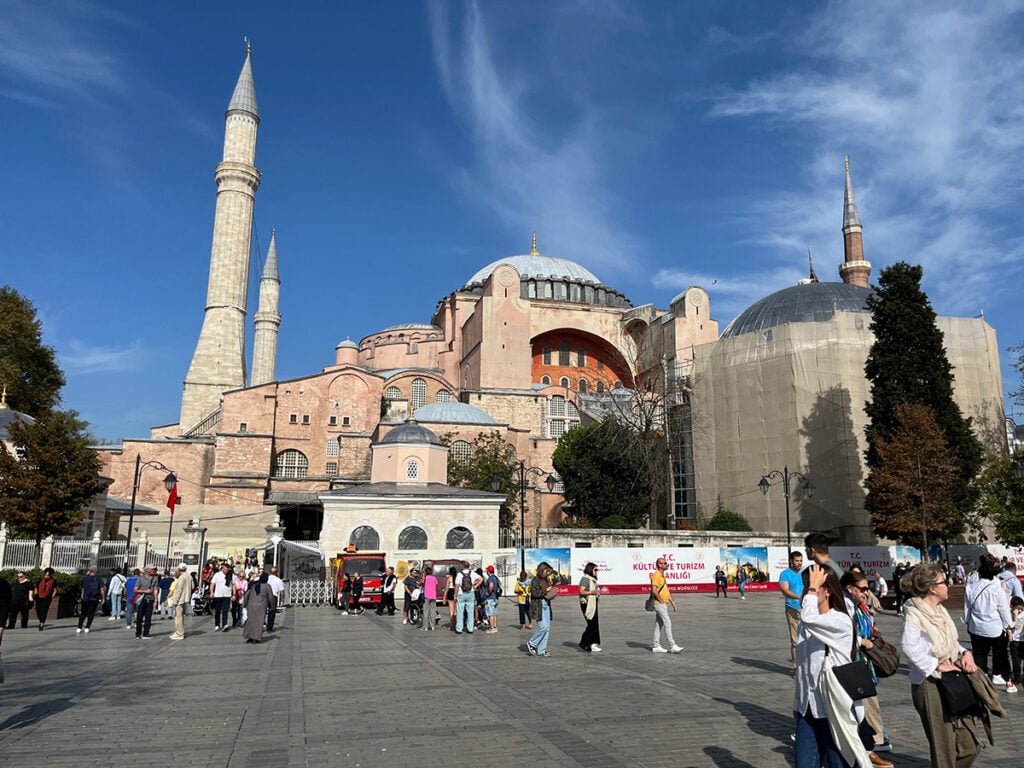
1. Step inside Hagia Sophia
If Istanbul has one building that tells the story of the whole city, the 6th century Hagia Sophia is it. It was completed in AD 537 as a Byzantine cathedral. It later became an Ottoman mosque, then a museum and is now a working mosque again.
When I visited the first time, it was a museum so we were free to wander and photograph the mosaic walls and centuries of peeling paint that revealed its history from Christianity to Muslim.
But when you’re inside, look up. Even if you’ve seen a hundred photographs, the scale of the dome is amazing. Look for traces of Byzantine mosaics, then look around at the enormous Islamic calligraphy medallions. Those overlapping layers are what make Istanbul so fascinating.
Foreign sightseeing visitors now follow a separate ticketed route through the upper gallery, while the ground floor is used for worship. Visitor arrangements can change during prayer times and restoration work, so check the latest details before you go.
Pro tip: Go as early as you can on a weekday and avoid Friday around midday prayers. Dress modestly, covering from shoulders to knees, and women should carry a scarf. You’ll remove your shoes where required, so slip-ons are best.
2. Visit the Blue Mosque
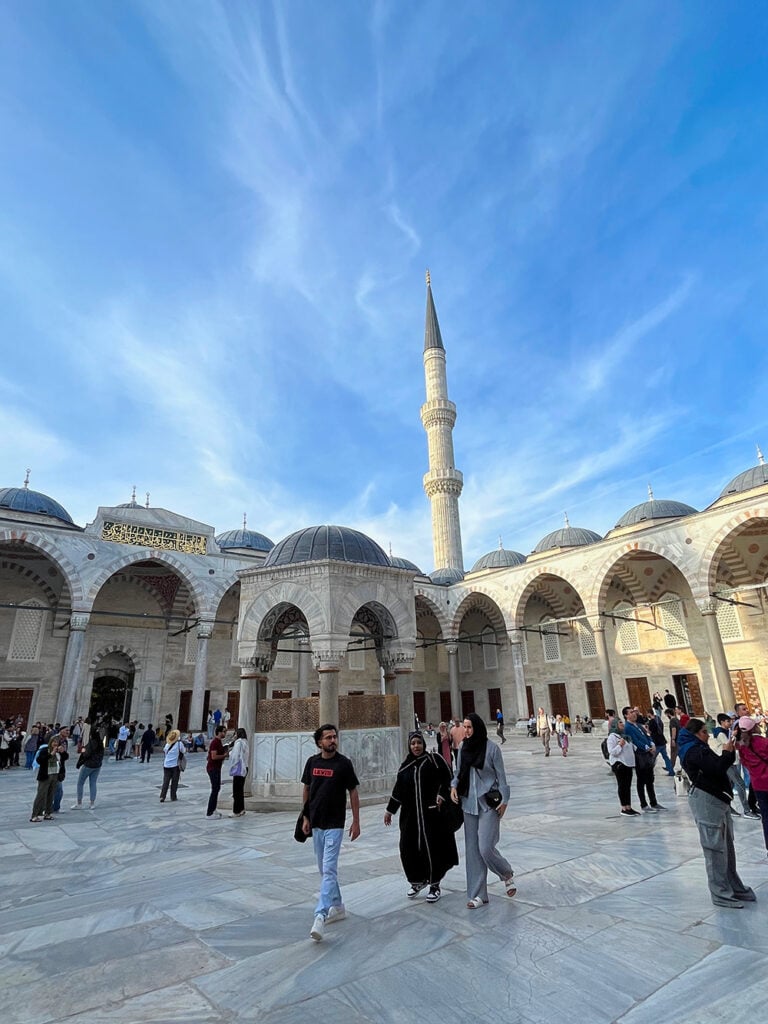
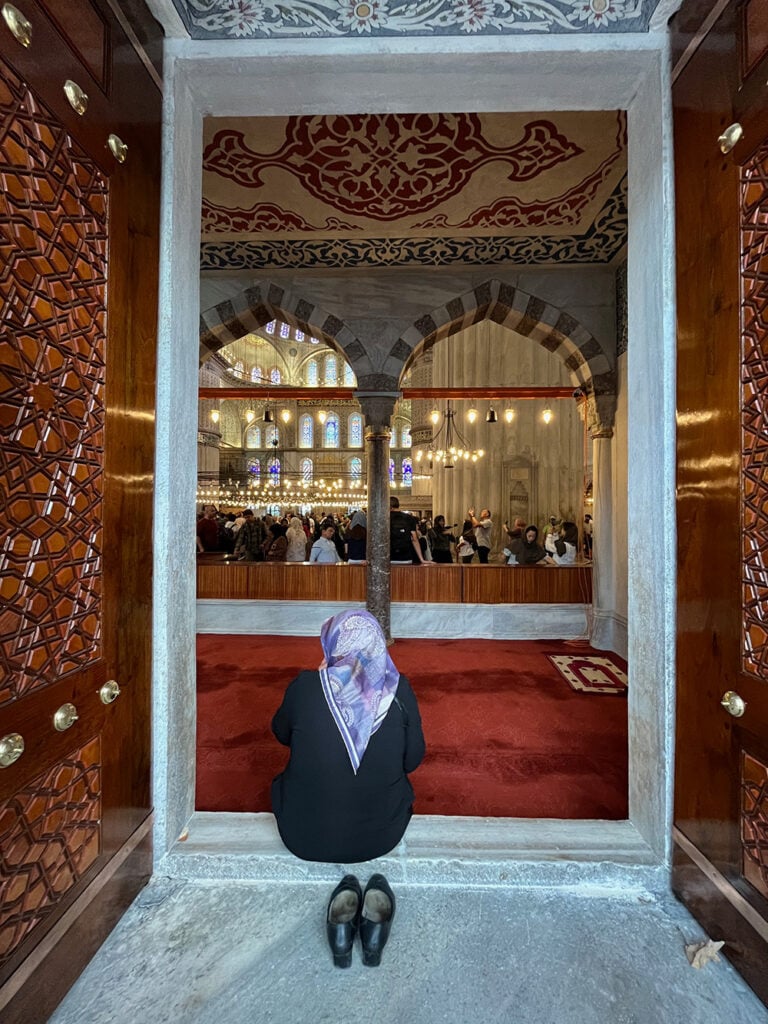
Directly opposite Hagia Sophia, through Sultan Ahmet Park, is Sultan Ahmed Mosque, better known as the Blue Mosque for the thousands of blue İznik tiles decorating its interior.
Admission is free, although visitors are not admitted during prayers. Once inside, give your eyes a moment to adjust, then look up. The cascade of domes, stained glass and vast carpeted prayer hall is beautiful.
Sultan Ahmet Park, between the Blue Mosque and Hagia Sophia is a wonderful place to return to after dark when both buildings are illuminated and the daytime tour groups have thinned.
Pro tip: Ignore unofficial “guides” who tell you the mosque is closed and offer to take you shopping instead. Check the entrance yourself or ask an attendant.
3. Descend into the Basilica Cistern
Just when you think Istanbul has shown you all its architectural tricks, it sends you underground.
The Basilica Cistern was built in the sixth century to store water for the Byzantine palace. Today, raised walkways lead through a shadowy forest of 336 columns, with reflections rippling below and two mysterious Medusa heads tucked away at the far end.
The modern lighting is theatrical without turning the place into a theme park. It only takes about 30 to 45 minutes to see, but it is one of the city’s most atmospheric experiences.
Pro tip: Book ahead and visit first thing or later in the day. The cistern is a marvellous escape when Istanbul is hot, wet or simply too crowded above ground. Day and evening sessions may operate differently, so check the official schedule before choosing a ticket.
Take this guided tour of Hagia Sofia, the Blue Mosque and the Basilica Cistern to hear from a local guide all about the history of these places.
4. Give Topkapı Palace plenty of time
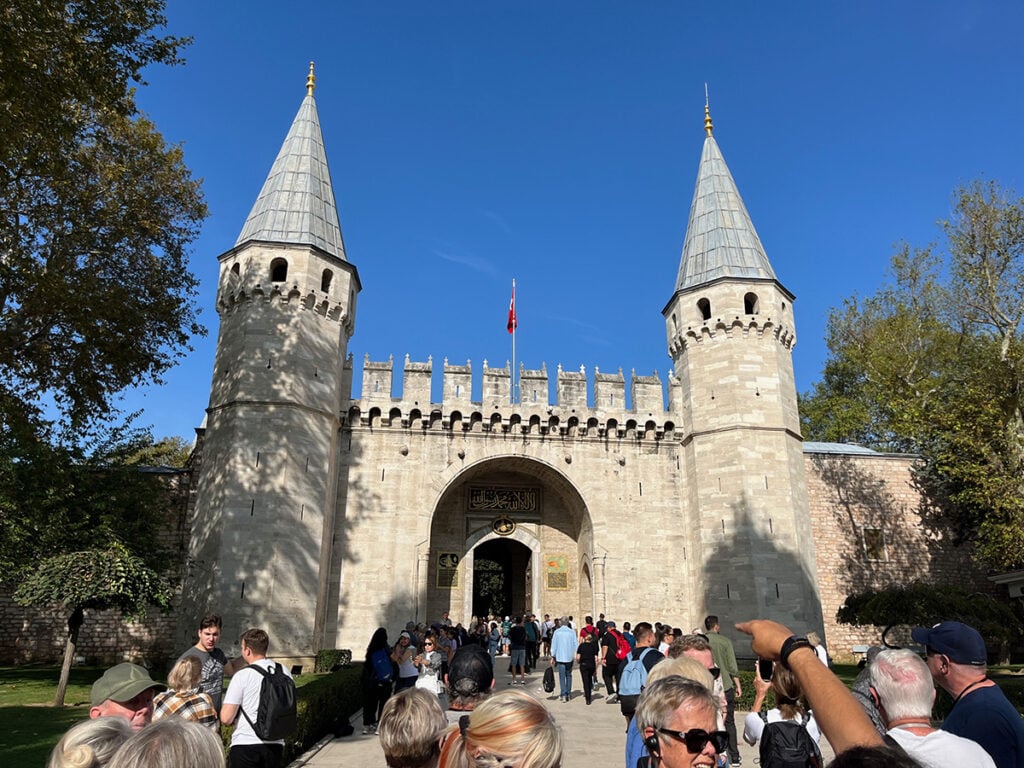
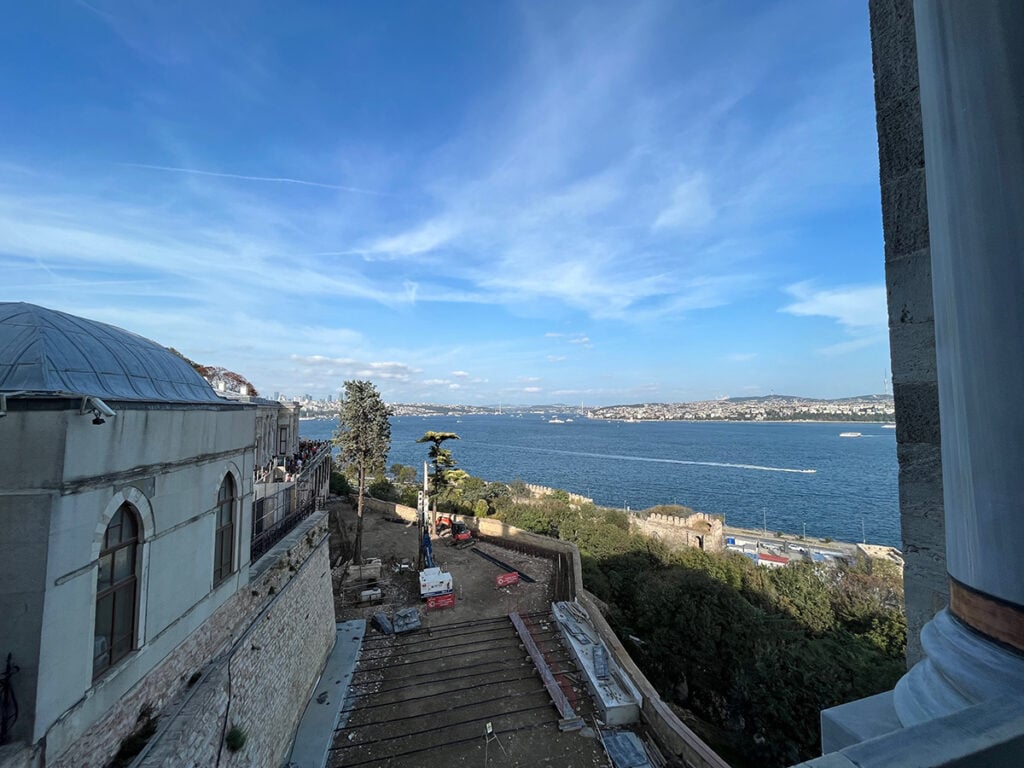
For almost 400 years, Topkapi Palace was the lavish home and administrative centre of the Ottoman sultans. It is less one grand building and more a collection of courtyards, pavilions, gardens and treasure rooms overlooking the Bosphorus.
The Imperial Treasury is filled with the sort of jewels that make the Crown Jewels look restrained, while the tiled chambers of the Harem reveal the more private side of palace life. The views from the outer terraces are worth the entrance fee alone.
Pro tip: Allow at least three hours and pay the extra admission for the Harem. Go early and head there before the biggest groups arrive. Check the weekly closing day when planning your itinerary.
5. Walk through the Hippodrome
The open square beside the Blue Mosque was once the Hippodrome of Constantinople, where tens of thousands gathered for chariot races, ceremonies and the occasional political riot.
The grandstands have vanished, but several monuments remain, including an ancient Egyptian obelisk and the twisting Serpent Column. It’s easy to hurry through because there is no ticket booth announcing that you have reached an attraction, but pause here and imagine the roar of the crowd.
6. Get happily lost in the Grand Bazaar
Prepare yourself for the Grand Bazaar! The first time I went, my cousin Kate and I went with a local male guide. We had the most wonderful time, browsing, shopping, drinking apple tea with vendors. But the next day we went back on our own. Oh. My! It could not have been more different with the hassling. You need your game face on for this place.
Fortunately, I have a very good game face, and I know how to haggle. And that is the name of the game.
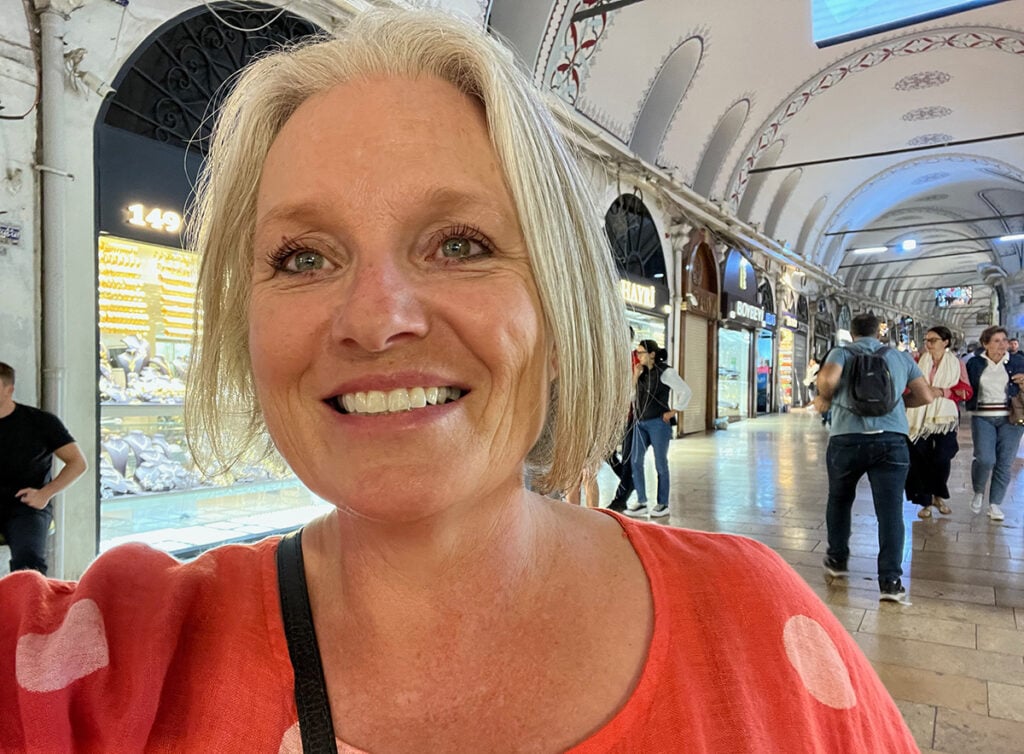
The Grand Bazaar is the absolute best place for shopping and has been here nearly 700 years. It is more like a small city with thousands of stores beneath painted vaulted ceilings. You’ll find carpets, jewellery, lanterns, leather everything from jackets to shoes, ceramics, scarves and enough Turkish delight to make your dentist nervous.
It is touristy, but it is also enormous fun if you treat it as an experience rather than a peaceful shopping day out. Wander away from the broad central lanes and you’ll find quieter courtyards and workshops where people still repair, polish and make things by hand. Have fun getting lost and don’t be rushing for time.
Pro tip: Never accept the first price, but keep the bargaining friendly. Decide what an item is worth to you, smile and be prepared to walk away. Also photograph the nearest gate or drop a pin on your map—you may not emerge where you went in. Read my guide on how to haggle cheerily to get the best bargain.
Customise this private tour to cover all the highlights you want to see – including having a local take you through the markets if you want some help in there.
7. Taste your way around the Spice Bazaar
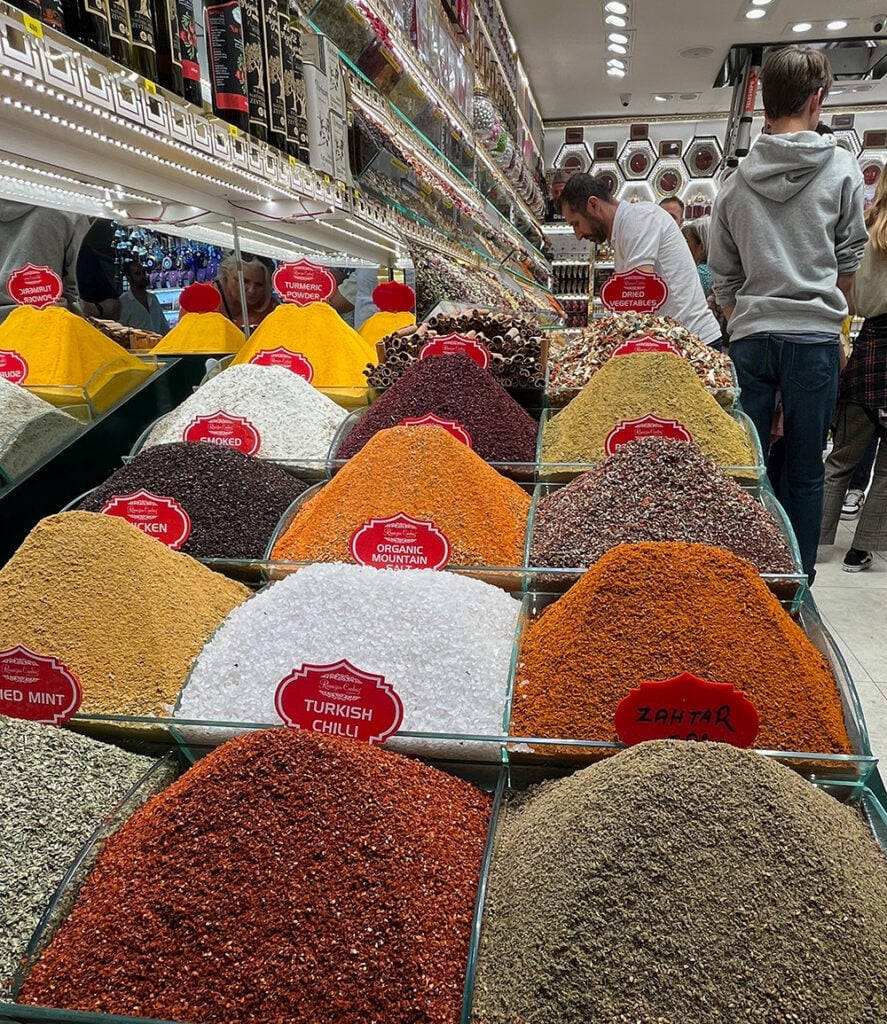
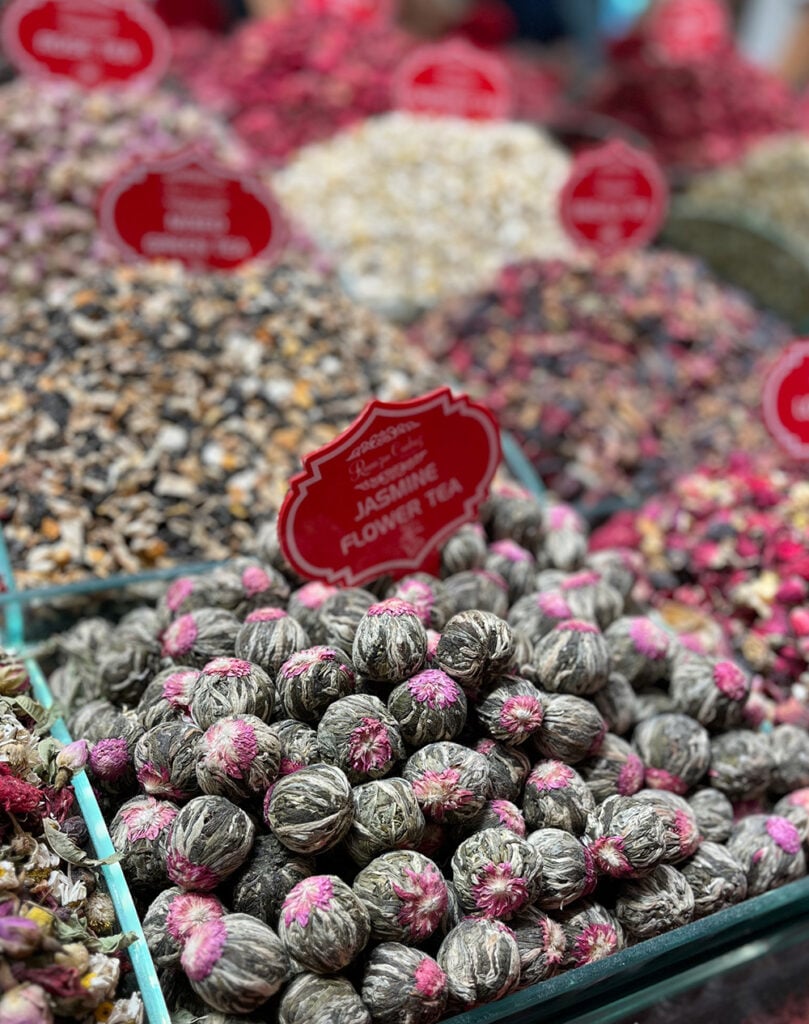
The Egyptian Bazaar, usually called the Spice Bazaar, is smaller and easier to navigate than the Grand Bazaar. The stalls are piled with earth-coloured spices, dried fruit, nuts, tea, honey, lokum and all manner of mysterious herbal potions.
A great place to try before you buy and look beyond the boxes of confectionery packaged for tourists. I head for the Turkish Delight, saffron, pistachios, chilli flakes, sumac and good Turkish tea.
Hidden gem: Continue into the streets behind the bazaar around Tahtakale. This is where locals shop for kitchenware, coffee, baskets, party supplies and household goods, and the prices become much more earthly.
8. Walk across Galata Bridge
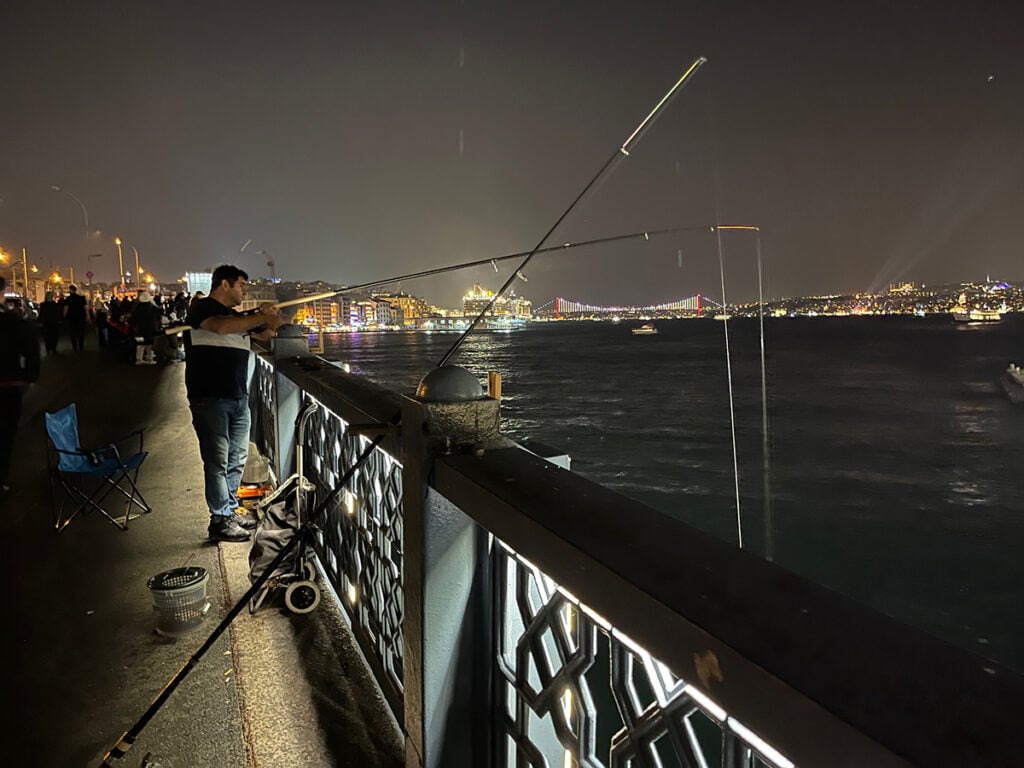
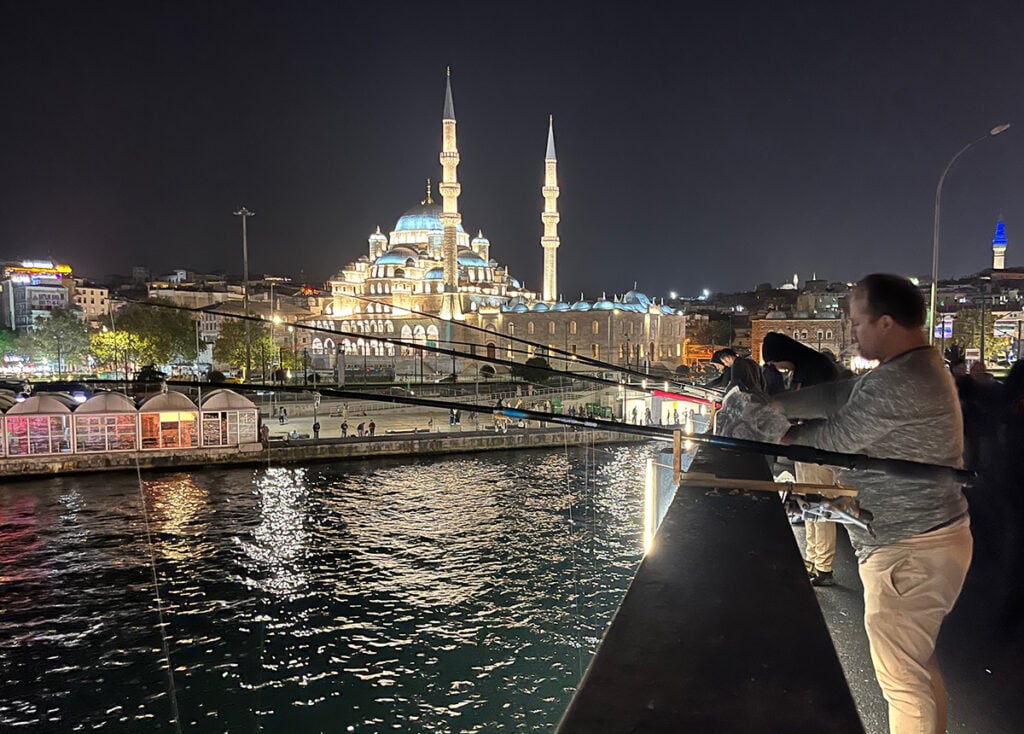
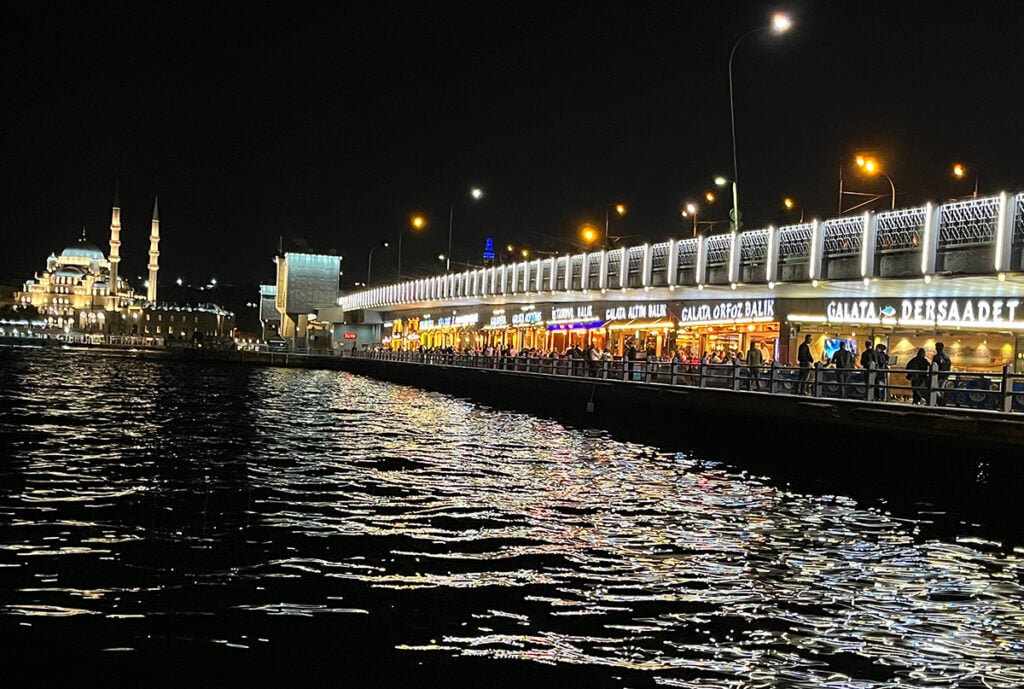
Galata Bridge spans the Golden Horn across the Bosphorus and is one of Istanbul’s great people-watching spots. Fishermen line the upper level from morning until night, ferries churn below and restaurant waiters compete for attention beneath the bridge.
Walk from Eminönü to Karaköy and stop halfway to take in the skyline of mosques behind you. We found a restaurant with great sunset views and sat down for an apple tea and a mezze platter.
9. Or take a public ferry across the Bosphorus Strait
You do not need an expensive cruise to enjoy one of Istanbul’s best experiences. Hop on a regular ferry, claim an outside seat and watch the city unfold between Europe and Asia.
Routes between Eminönü or Karaköy and Kadıköy or Üsküdar give you minarets, palaces, waterfront mansions, seagulls and that unmistakable Istanbul soundtrack of engines, gulls and tea glasses. Buy a tea and a simit on board and you have my idea of a near-perfect city excursion.
Pro tip: Take one crossing just before sunset, but bring a light layer even in summer—it can be breezy on the water. Public ferries accept Istanbul’s transport payment system and cost far less than a sightseeing cruise.
10. Cruise farther up the Bosphorus
For a broader view, take a dedicated Bosphorus cruise or one of the longer public ferry routes towards the Black Sea. You’ll pass Dolmabahçe Palace, Ortaköy Mosque, the great suspension bridges, Ottoman-era waterfront mansions and the fortress of Rumeli Hisarı.
A short cruise is easy to fit into a busy itinerary; a long ferry trip makes a lovely slower day. Choose according to how much time you have rather than automatically booking the first cruise being waved at you near the docks.
Pro tip: Compare the route, duration and whether the boat returns to the same pier. Some cheap tours are essentially a long sales pitch with very little time on the water.
11. Climb Galata Tower—or admire it from below
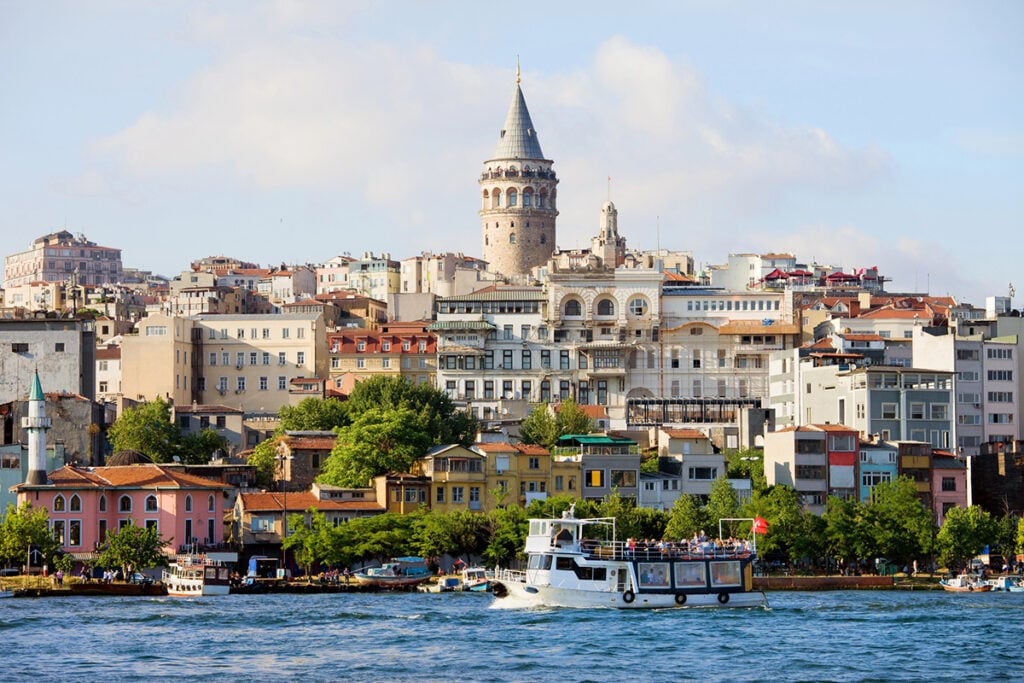
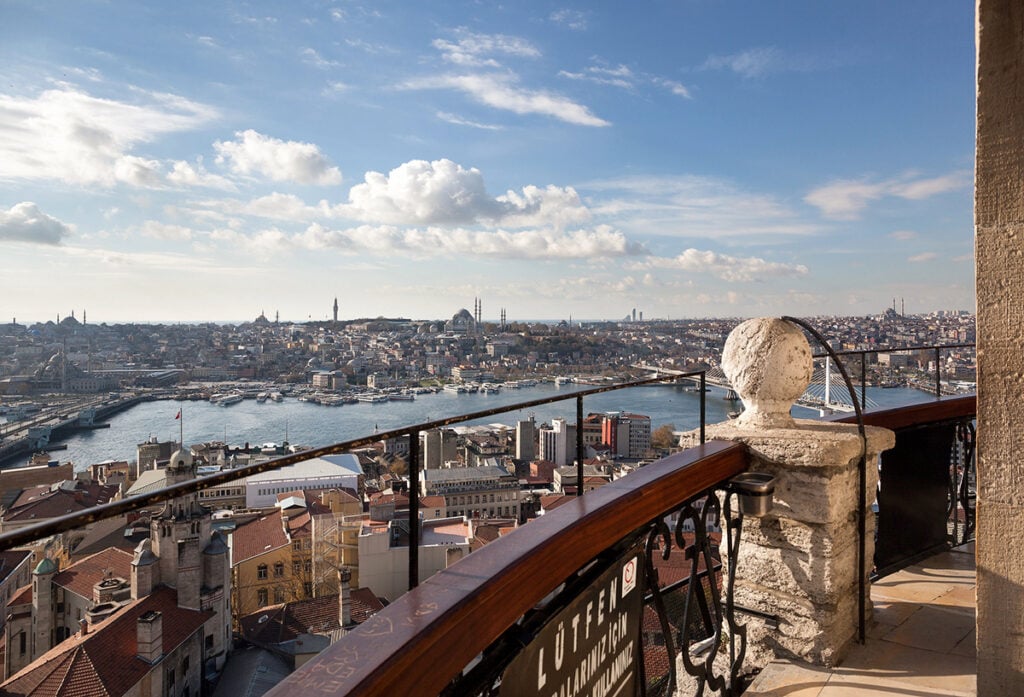
Galata Tower has watched over this part of the city since the 14th century. Its observation level delivers a magnificent 360-degree view over the Golden Horn, Bosphorus and tightly packed rooftops of Beyoğlu.
Queues can be long and the immediate streets get very busy, so I also recommend wandering downhill through the lanes around Galata. You’ll find design stores, music shops, cafés and photogenic stairways, with the stone tower appearing dramatically between the buildings.
Pro tip: Go near opening time for clearer photos, or come around golden hour if you don’t mind sharing the view. Book a timed ticket if one is available.
12. Wander through Karaköy
Karaköy is where old hardware shops, crumbling façades, stylish cafés, galleries and bakeries rub shoulders. It is a good neighbourhood for coffee, brunch and aimless wandering, especially after crossing Galata Bridge.
Don’t miss the underground passage connecting Karaköy with the waterfront. It is practical rather than pretty, but the fish stalls, graffiti and constant tide of commuters give you a quick slice of everyday Istanbul.
Nearby, the Renzo Piano-designed Istanbul Modern is a smart choice for contemporary Turkish art—and for a rainy afternoon.
13. Shop along İstiklal Avenue
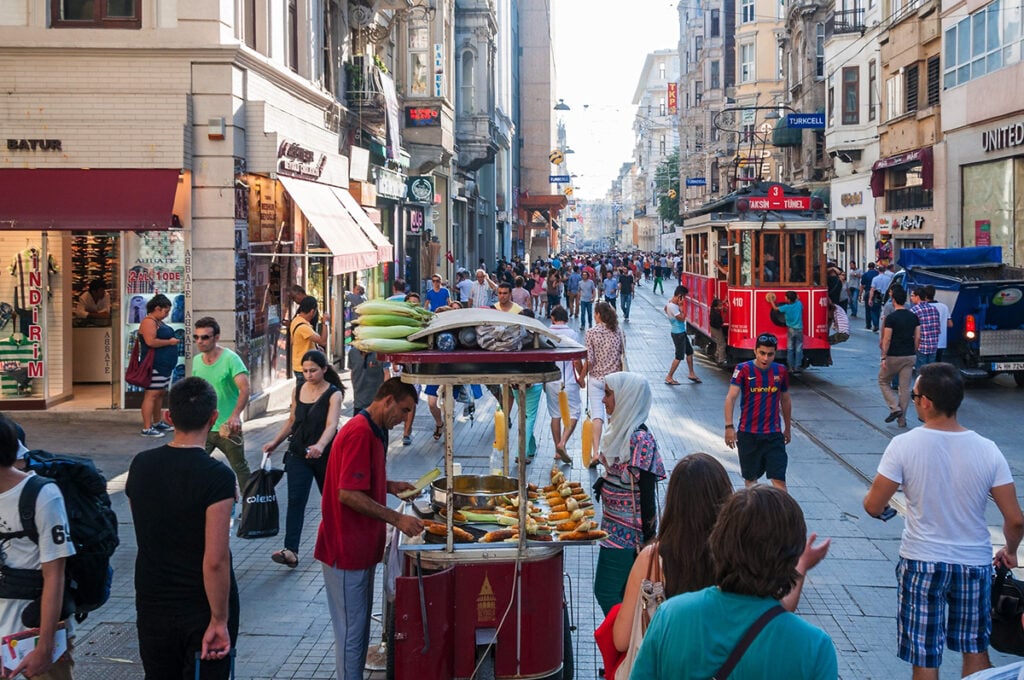
If you want some shopping therapy, and not the market/haggling kind, wander along Istiklal Avenue. It is pedestrianised and lined with shops, restaurants, hotels and has a great nightlife.
You’ll find global brands alongside popular Turkish stores, and several lanes with shops to keep you busy. Istiklal Mall is a modern four-level mall with many international brands, but you’ll also find older, more historic shopping arcades with locally made fashion.
Hidden gem: Step inside the Church of St Anthony of Padua, set back from the avenue behind a peaceful courtyard. A few minutes away, the tiny Crimean Memorial Church sits in a leafy garden and feels improbably removed from İstiklal’s bustle.
14. Visit Galatasaray Hamam
If you dare! One time we were staying in Beyoğlu, over near Taksim Square at the wonderful Tomtom Suites, a Small Luxury Hotel. I wrote my review here, if you’d like to see what’s around it.
I wanted an authentic Turkish bath hammam experience, and even though many hotels offer them, they are more like spa packages. I wanted the real thing. But crikey! I was schooled. Leave your modesty at the door, and prepare to have every inch of your body washed and scrubbed!
Here’s my full experience in this post …
15. Go underground on the Tünel
The Tünel funicular opened in 1875 and is one of the world’s oldest underground urban railways. Its journey between Karaköy and Beyoğlu lasts only a couple of minutes, but it saves a steep climb and gives transport enthusiasts a tiny historic thrill.
I particularly like using it uphill, then meandering back down through Galata under my own steam.
16. Explore colourful Balat and Fener
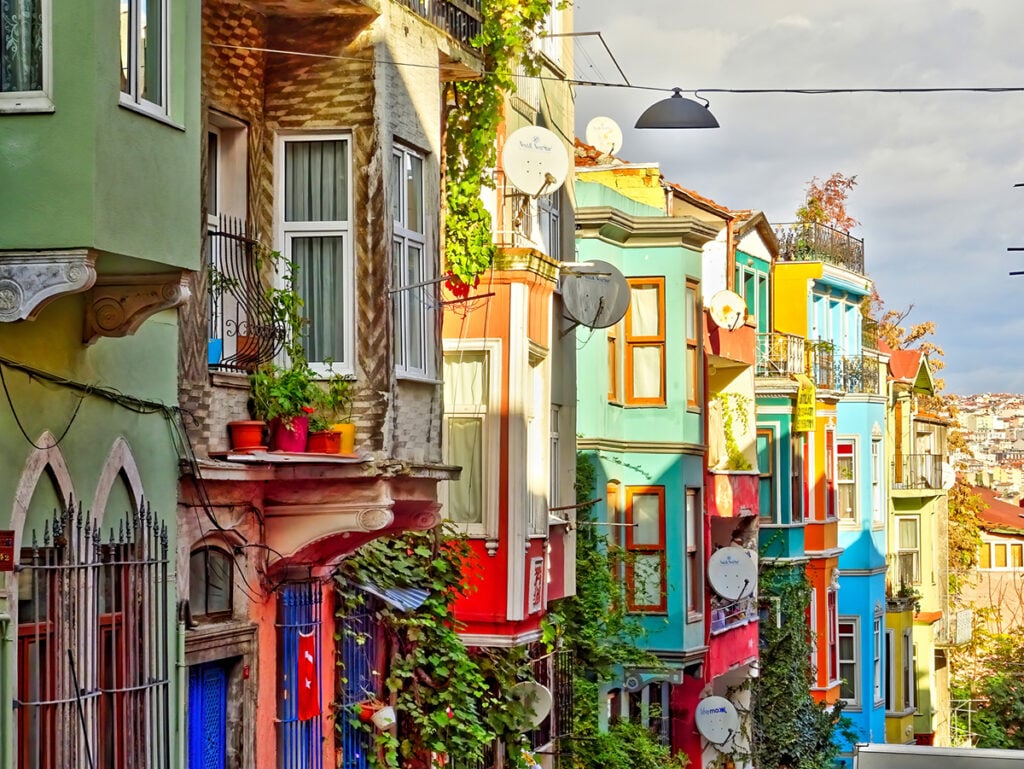
Balat’s colourful houses have become Instagram famous, but this historic neighbourhood on the Golden Horn is far more interesting than a row of pretty façades. Greek Orthodox, Jewish and Muslim communities have all shaped these steep streets, where churches, synagogues, antique stores and neighbourhood cafés sit side by side.
See the imposing red-brick Greek Orthodox College from the street and visit the Church of St Stephen of the Bulgars, an ornate iron church beside the water. Then put the phone away and wander respectfully—people live behind those photogenic doors.
Pro tip: The famous coloured houses are on real residential streets. Keep voices down, don’t block doorways and never perch on someone’s front step for a photograph.
17. Visit opulent Dolmabahçe Palace
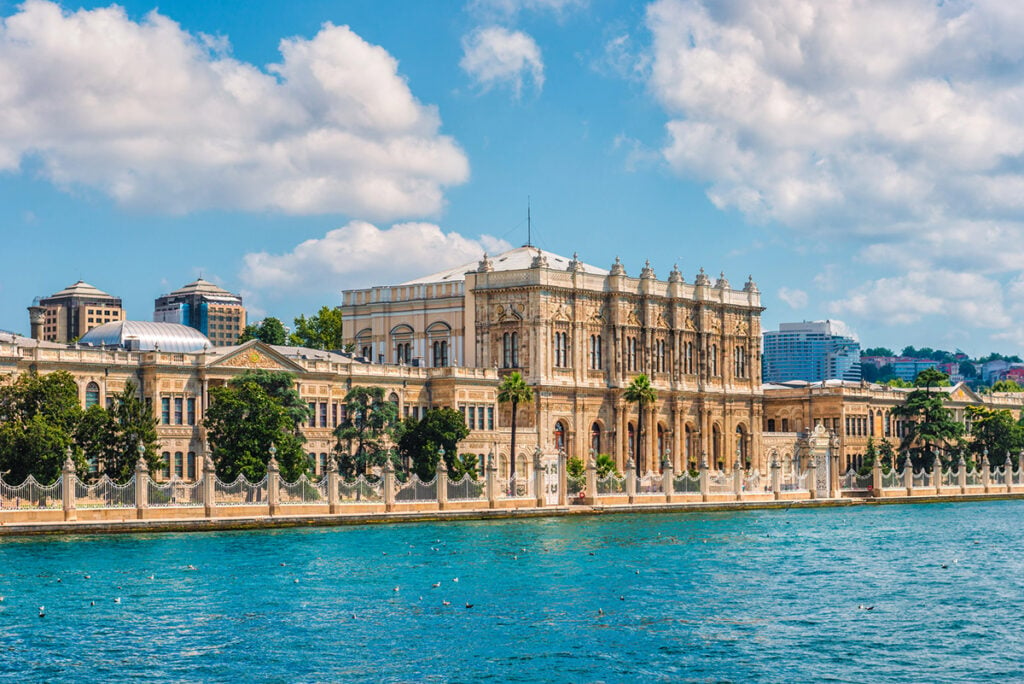
If Topkapı is a collection of Ottoman courtyards and pavilions, Dolmabahçe is the empire making a very grand European-style statement. The waterfront palace has chandeliers, gilt, sweeping staircases and ceremonial rooms designed to impress visiting dignitaries.
Its setting on the Bosphorus is glorious and the contrast with Topkapı makes it worth seeing both. Mustafa Kemal Atatürk, founder of modern Türkiye, also spent his final days here.
Pro tip: Photography is restricted in parts of the palace, and visitor numbers can build quickly. Arrive near opening time and check the official closing day before going.
18. Spend an evening in Kadıköy and Moda
Crossing to the Asian side is not a day trip out of Istanbul; it is simply another side of Istanbul, and one many visitors end up liking best.
Kadıköy Market is packed with fishmongers, pickle shops, delicatessens, meyhanes and dessert counters. Graze as you go or settle in for a table full of meze. Afterwards, walk or take the heritage tram towards Moda, a relaxed neighbourhood of cafés, parks and waterfront paths.
Pro tip: Come hungry in the late afternoon, explore the market before dinner and take the ferry back after dark. Seeing the illuminated European skyline from the water is a wonderful finale.
19. Watch sunset from Üsküdar
Üsküdar, also on the Asian side, offers one of the classic Istanbul sunset views. Walk south along the promenade towards Salacak and you’ll see the Maiden’s Tower sitting just offshore, with the domes and minarets of the old city silhouetted across the Bosphorus.
Locals sit on the waterfront steps with tea and sunflower seeds. Join them. Sometimes the simplest experiences are the ones you remember most.
Hidden gem: Detour into Kuzguncuk before sunset. Its colourful wooden houses, small galleries, churches, synagogues and leafy community garden give it the atmosphere of a Bosphorus village.
If you’re not Mosque’d out….
20. Discover Zeyrek and the Women’s Bazaar
For a less polished glimpse of old Istanbul, walk through Zeyrek. The neighbourhood climbs around the former Pantokrator Monastery, now the Zeyrek Mosque, and has wonderful views across tiled roofs and the Golden Horn.
Nearby Kadınlar Pazarı, or the Women’s Bazaar, is known for produce and restaurants from southeastern Türkiye. This is the place to try strong cheeses, honey, kebabs and büryan—lamb traditionally cooked in a pit oven.
Hidden gem: Cross beneath the monumental Valens Aqueduct nearby. Built by the Romans and later maintained by the Ottomans, it now strides above modern traffic as if this is perfectly normal—which, in Istanbul, it rather is.
21. Eat a kumpir beside Ortaköy Mosque
Ortaköy Mosque looks almost as though it is floating on the Bosphorus, framed by the bridge behind it. The small waterfront square is lively with cafés, market stalls and vendors selling kumpir—enormous baked potatoes mashed with butter and cheese, then loaded with your choice of toppings.
It is not Istanbul’s quietest corner, but the setting is terrific, particularly in the early evening.
Pro tip: Photograph the mosque from the waterfront square, then walk a little north along the shore for a different angle away from the busiest cluster of stalls.
22. Find the exquisite Rüstem Pasha Mosque
This small 16th-century mosque is one of Istanbul’s loveliest secrets, despite being only a few minutes from the Spice Bazaar. Its entrance is easy to miss above the busy market streets, but climb the stairs and you’ll find walls covered in exceptional blue, turquoise and red İznik tiles.
It doesn’t have the monumental scale of the Blue Mosque. It is more intimate, peaceful and rather like finding a jewellery box hidden above the city.
Pro tip: It is a working mosque, so avoid prayer times and dress respectfully. Entry is free; a small donation is a nice gesture.
23. Admire the view from Süleymaniye Mosque
Süleymaniye Mosque sits high above the Golden Horn and somehow feels calmer than the headline attractions below. It is a masterpiece of 16th-century Ottoman architecture. Built between 1550 and 1557 by the great architect Mimar Sinan for Sultan Suleiman the Magnificent, it is elegant, airy and beautifully balanced.
Also visit the garden and cemetery for panoramic views across the water. The surrounding lanes are good for a simple lunch of kuru fasulye—Turkish white beans—served with rice and pickles.
Pro tip: Come in the late afternoon, then walk downhill through the old streets towards Eminönü. The slope is much more agreeable in this direction!
24. Escape to the Princes’ Islands
If you have an extra day, take the ferry to the Princes’ Islands in the Sea of Marmara. Büyükada is the largest and busiest, with grand timber mansions, seafood restaurants and pine-covered hills. There are no ordinary private cars, so the pace feels very different from central Istanbul.
Walk, hire a bicycle or use the island’s electric transport, then linger over lunch by the water. Heybeliada is a quieter alternative if Büyükada sounds a little too popular.
Pro tip: Go on a weekday and take an early ferry. Weekends and summer holidays can be extremely busy. Check the return timetable before you set off exploring, rather than discovering at dinner time that your preferred ferry has already sailed.
More delicious things to eat in Istanbul
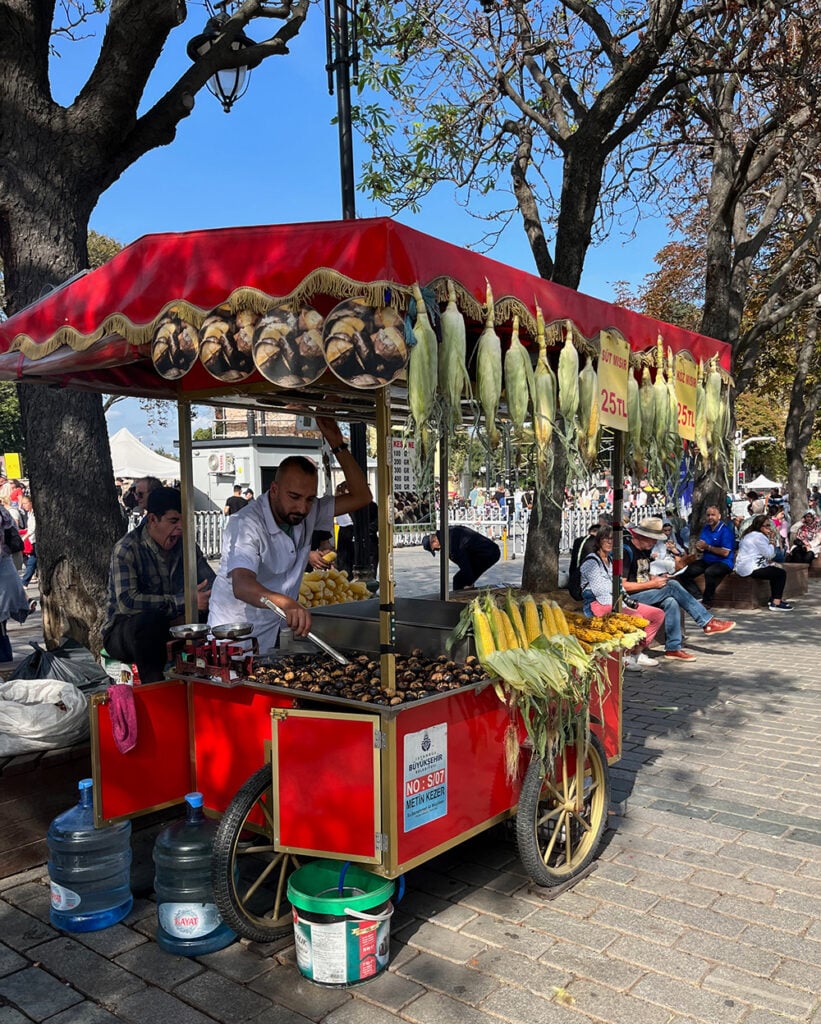
Istanbul is a city where sightseeing and eating should be treated as one combined activity. These are a few things I’d have on my list:
- A crisp simit, covered in sesame seeds, preferably warm, with tea
- A full Turkish breakfast with cheeses, olives, eggs, tomatoes, honey and bread
- Balık ekmek, or fish sandwich, near the waterfront
- Lahmacun topped with herbs and a squeeze of lemon
- Mantı, tiny dumplings served with garlicky yoghurt and chilli butter
- Meze followed by grilled fish at a meyhane
- Baklava made with pistachios
- Künefe, a hot cheese pastry soaked in syrup
- Dondurma, the stretchy Turkish ice cream served with a side order of theatre
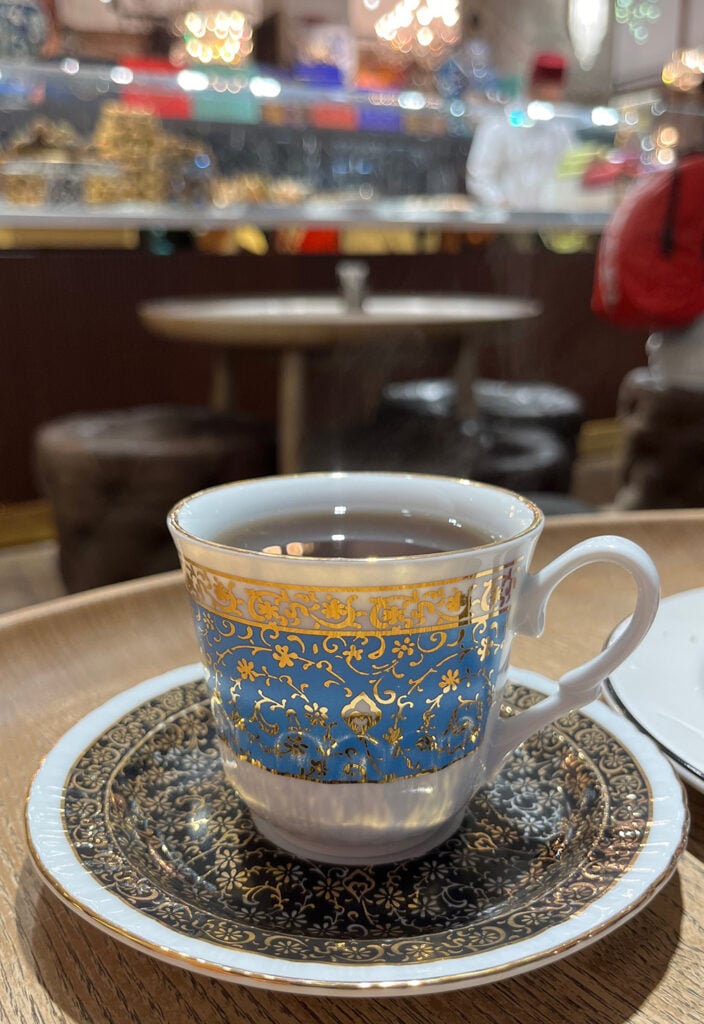
- Strong Turkish coffee
- Apple tea – offered by most market vendors
Pro tip: Restaurants with hosts aggressively waving menus at you in the most touristy streets are rarely your only option. Walk two blocks away, look for a busy room full of local diners and check the menu prices before sitting down.
Getting around Istanbul
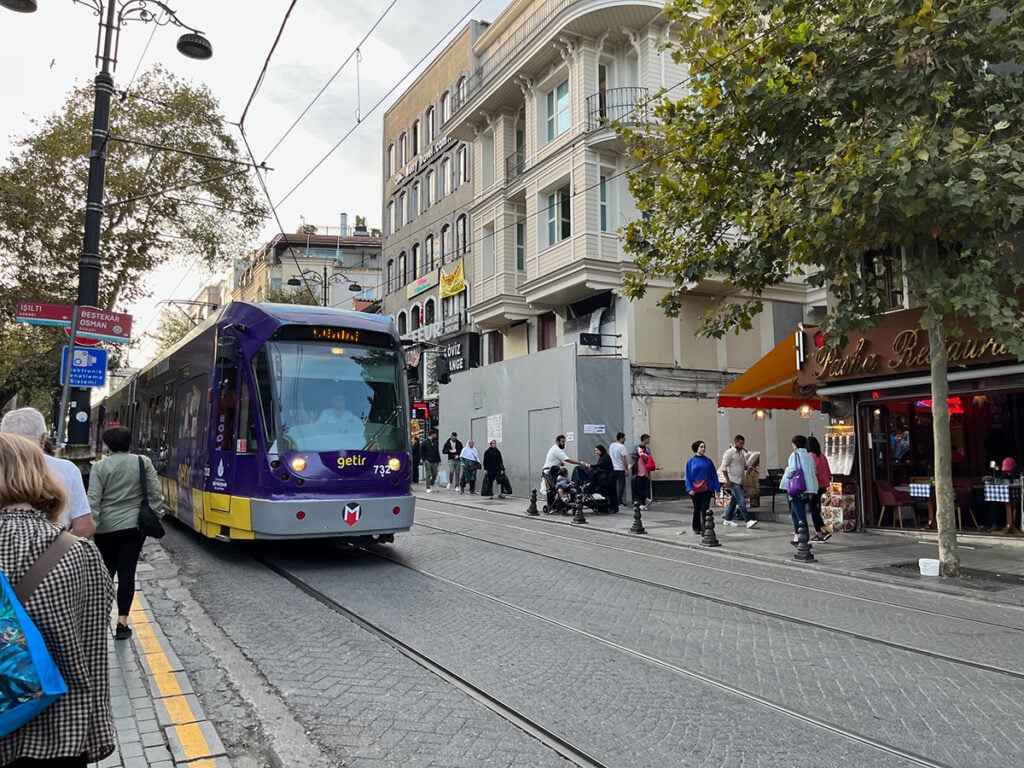
The tram, metro, funiculars and ferries make Istanbul much easier to navigate than its size suggests. The T1 tram is useful for Sultanahmet, Eminönü, Karaköy and connections towards Kabataş, although it can become tightly packed.
You should be able to use contactless bank cards across public transport, or Istanbulkart cover buses, metro, tram, funicular, Marmaray and ferries. Check the current fare options when you arrive, as transport products and prices do change.
Walking is still the best way to find the little details, but the hills are real. Use a funicular for the steepest sections and save your feet for exploring.
Pro tip: Traffic can be ferocious, so don’t automatically reach for a taxi. Use rail or ferry whenever it makes sense, allow generous time for airport journeys and only use an official metered taxi or a reputable ride-booking app.
What to know before visiting Istanbul
- Allow more time than the map suggests. Hills, crowds, security queues and irresistible snack stops all slow you down.
- Check religious opening times. Working mosques close to tourists during prayers, especially around Friday midday.
- Carry a scarf and dress modestly. It makes spontaneous mosque visits much easier.
- Keep small amounts of Turkish lira. Cards are widely used, but small shops, tips and market purchases may be easier with cash.
- Drink bottled or properly filtered water. Tap water is treated, but many visitors prefer not to drink it.
- Watch your belongings. Istanbul is generally welcoming, but crowded trams, bazaars and pedestrian streets are sensible places to guard against pickpockets.
- Avoid the classic “friendly stranger” traps. Be wary of unsolicited invitations to a bar, help with a dropped shoe brush or anyone insisting an attraction is closed and offering an alternative.
- Buy tickets from official websites or authorised sellers. Search results can be crowded with unofficial ticket pages charging hefty mark-ups.
How many days do you need in Istanbul?
Three days will give you the Sultanahmet essentials, a bazaar, a ferry ride and a quick look at Beyoğlu. Four days is much better. With five days, you can add the Asian side, slow down over meals and explore Balat or take a longer Bosphorus cruise. Stay six or seven days and you’ll have time for the Princes’ Islands without racing through the rest.
My ideal first visit would be five days: two days around the historic peninsula, one day for Karaköy, Galata and Beyoğlu, one day split between a Bosphorus experience and the Asian side, then one flexible day for a palace, neighbourhood wandering, a hammam—or whatever you realised on day one that you simply had to eat again.